Guide · Where fish comes from
Wild or farmed fish: what are the differences on the plate?The view from a Marseille fishermen's restaurant
Taste, texture, seasons, price, labelling and fishing methods: a practical, guilt-free comparison from Pointe Rouge.
Book a table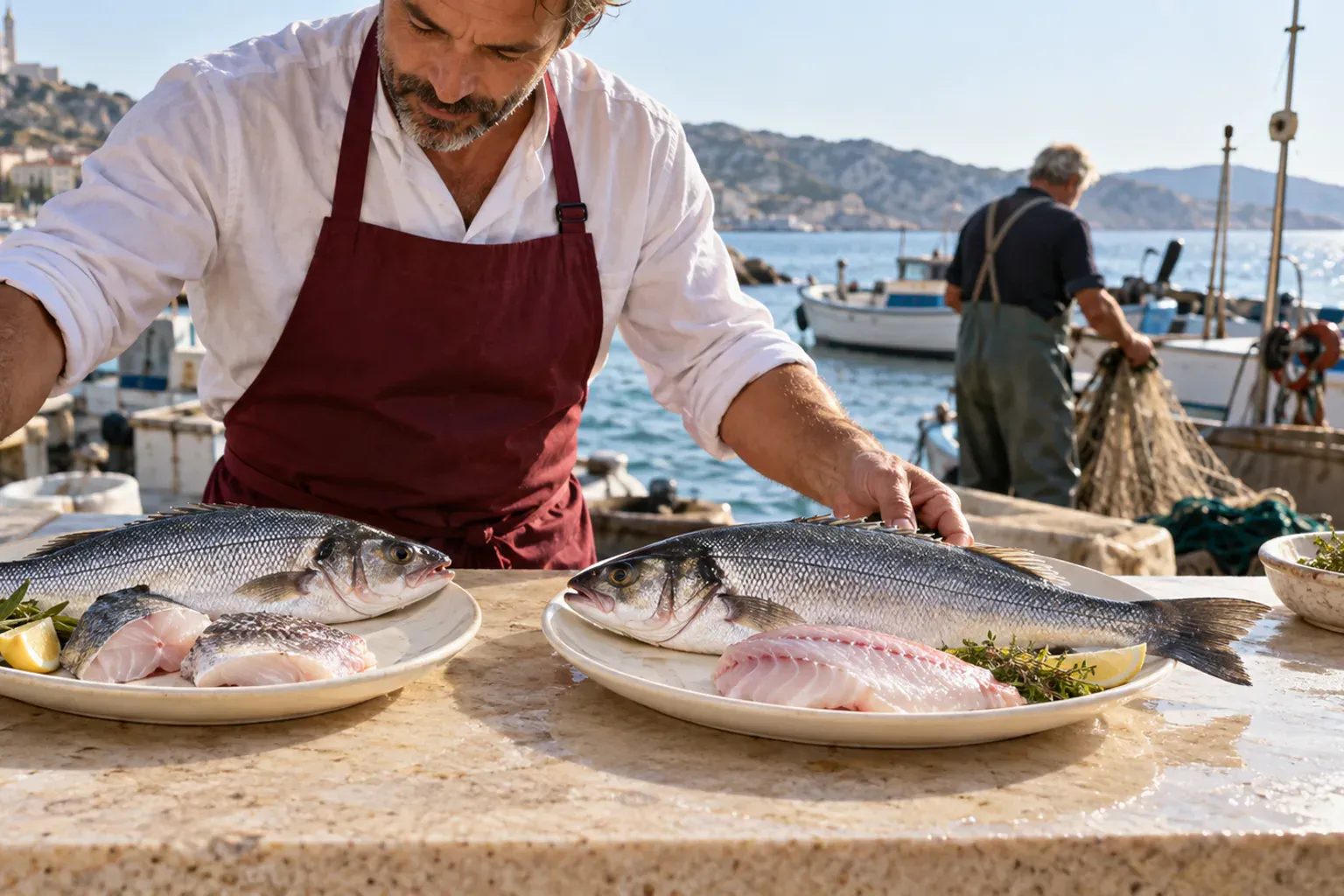
Wild fish is caught at sea; farmed fish grows in aquaculture, in sea cages or tanks. In the Mediterranean, sea bream, sea bass and meagre are widely farmed, so the name alone says nothing about origin. Wild fish tends to have firmer, leaner, more briny flesh, but depends on season and weather and usually costs more; farming offers steady supply and even sizes. Check the label ("caught" or "farmed", FAO area 37 for the Mediterranean, fishing gear) and, at a restaurant, simply ask.
"Sea bream", "sea bass": names that sound like the Mediterranean, but say nothing about where the fish comes from.
No judgement here — just what you need to know to choose with confidence.
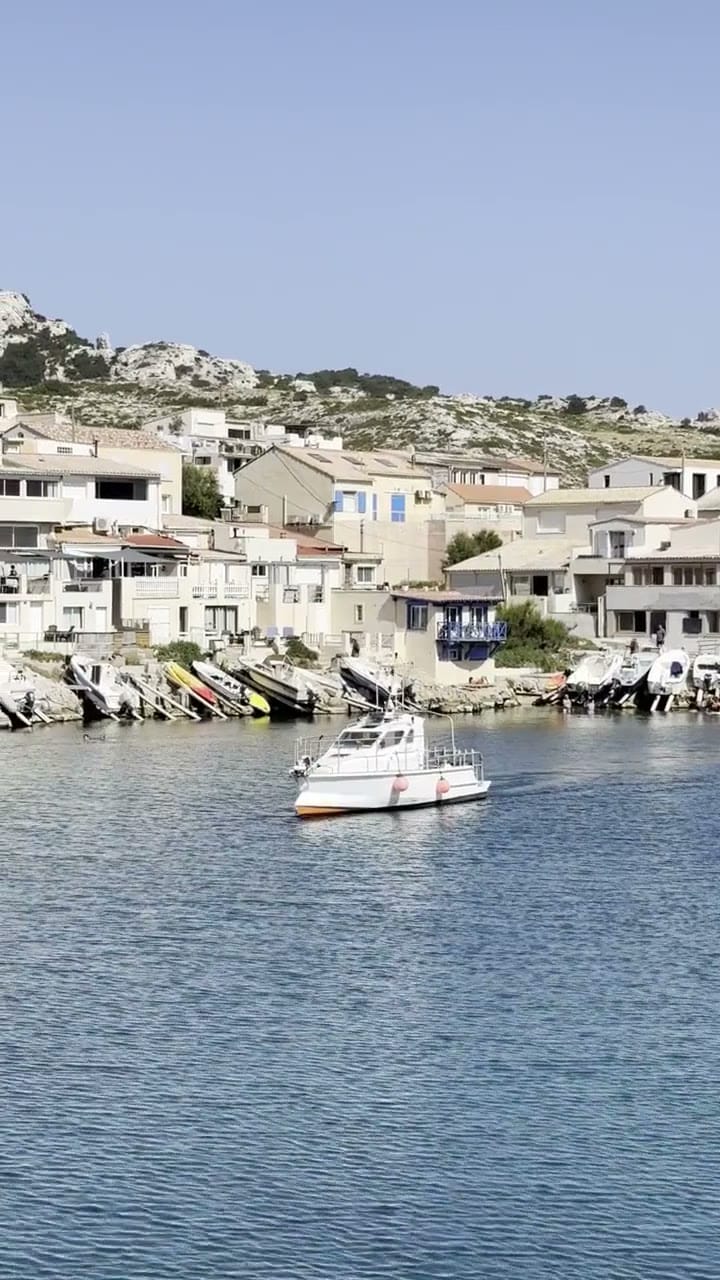
Wild fish, farmed fish: what are we talking about?
Wild fish: caught at sea, from small coastal boats to offshore fleets
Wild fish lived freely before being caught — by small coastal boats returning the same morning, or by larger offshore vessels.
Farmed fish: aquaculture at sea or on land
Farmed fish grows in sea cages or land tanks and is fed pellets. Sea bream, sea bass and meagre are the most farmed Mediterranean species.
Fresh, wild, in season: three different ideas
Fresh is about condition, wild about origin, in season about timing. None implies the others.
For freshness signs, read How to tell if a fish is fresh?.
Differences you can see and taste
Trends, not rules: here is what we usually notice.
Flesh: firmness, texture, fat
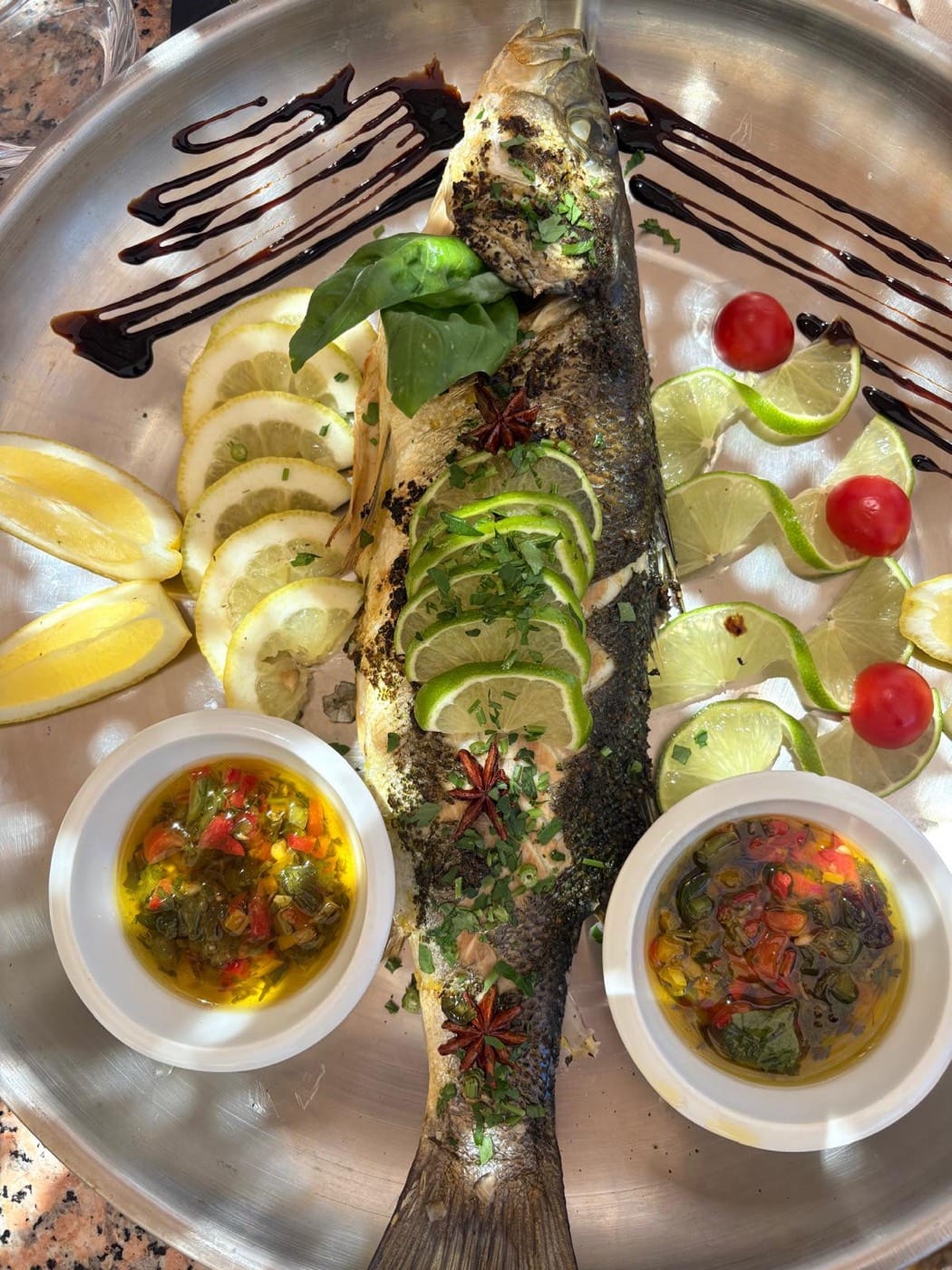
Wild fish is usually firmer and leaner; farmed fish more tender and fattier.
Taste: brine versus pellets
Wild fish tastes more briny and varies; farmed fish is milder and more consistent.
Appearance: fins, colour, shape
Worn fins or a rounder body may hint at farming — never a certainty.
Size and consistency
Identical sizes suggest farming; wild catches come in all sizes.
The comparison at a glance
General trends; prices are relative only.
| Criterion | Wild fish | Farmed fish |
|---|---|---|
| Supply | Irregular, weather-dependent | Steady all year |
| Taste | More briny, variable | Milder, consistent |
| Indicative price | Usually higher | Usually more affordable |
Real quality also depends on freshness, handling and the farmer's care.
Finding out
How to find out where the fish comes from
- 01
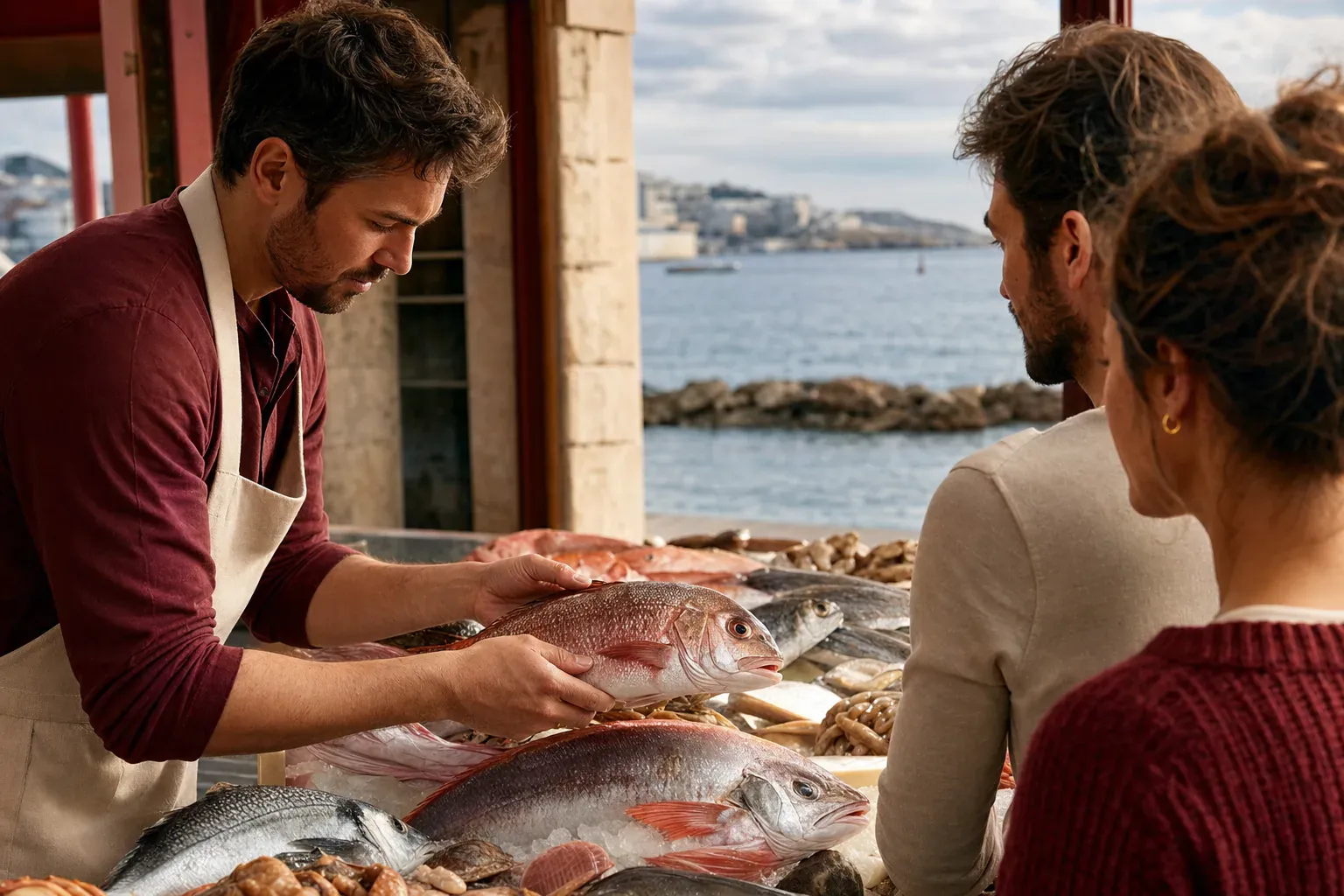
Mandatory labelling at the fishmonger's
EU rules require origin information on fresh fish.
- Production method: "caught" or "farmed".
- Catch area: FAO 37 for the Mediterranean and Black Sea.
- Fishing gear category, or country of farming.
- 02
At the restaurant: the right questions
Ask where the fish comes from, whether it's wild, and when it arrived.
- 03
Wording that should reassure or worry you
"Catch of the day" reassures when the menu genuinely changes; vague wording deserves a question.

The sea decides
Wild Mediterranean fish: seasons and constraints
Wild fish follows weather and seasons, so the menu moves.
For species by season, see Which fish to eat in Marseille?.
Small-scale fishing and the resource
Artisanal fishing works within rules such as minimum catch sizes.
Let the catch guide you rather than demanding a given species.
Is farmed fish necessarily a bad choice?
No: it all depends on how the fish is farmed.
Quality farming exists
Practices vary widely between producers.
Labels help
Organic or Label Rouge set specifications for some species.
Consistency has advantages
Year-round supply, predictable size and price.
The real issue is not farming but a lack of transparency.
At Pointe Rouge: l'Estéou's catch of the day
At l'Estéou, our catch of the day landed in the morning at Pointe Rouge comes from the boat of the Patron and a crew of fishing friends.
The menu follows the catch — ask the team where your fish comes from.
Read how fish is caught at Pointe Rouge, or try a sea fishing trip.
Then enjoy it at a fresh fish restaurant: a whole grilled fish. To do it at home, see how to grill a whole fish.
Taste the difference: come for the catch of the day facing the sea and book your table at l'Estéou.
Book my table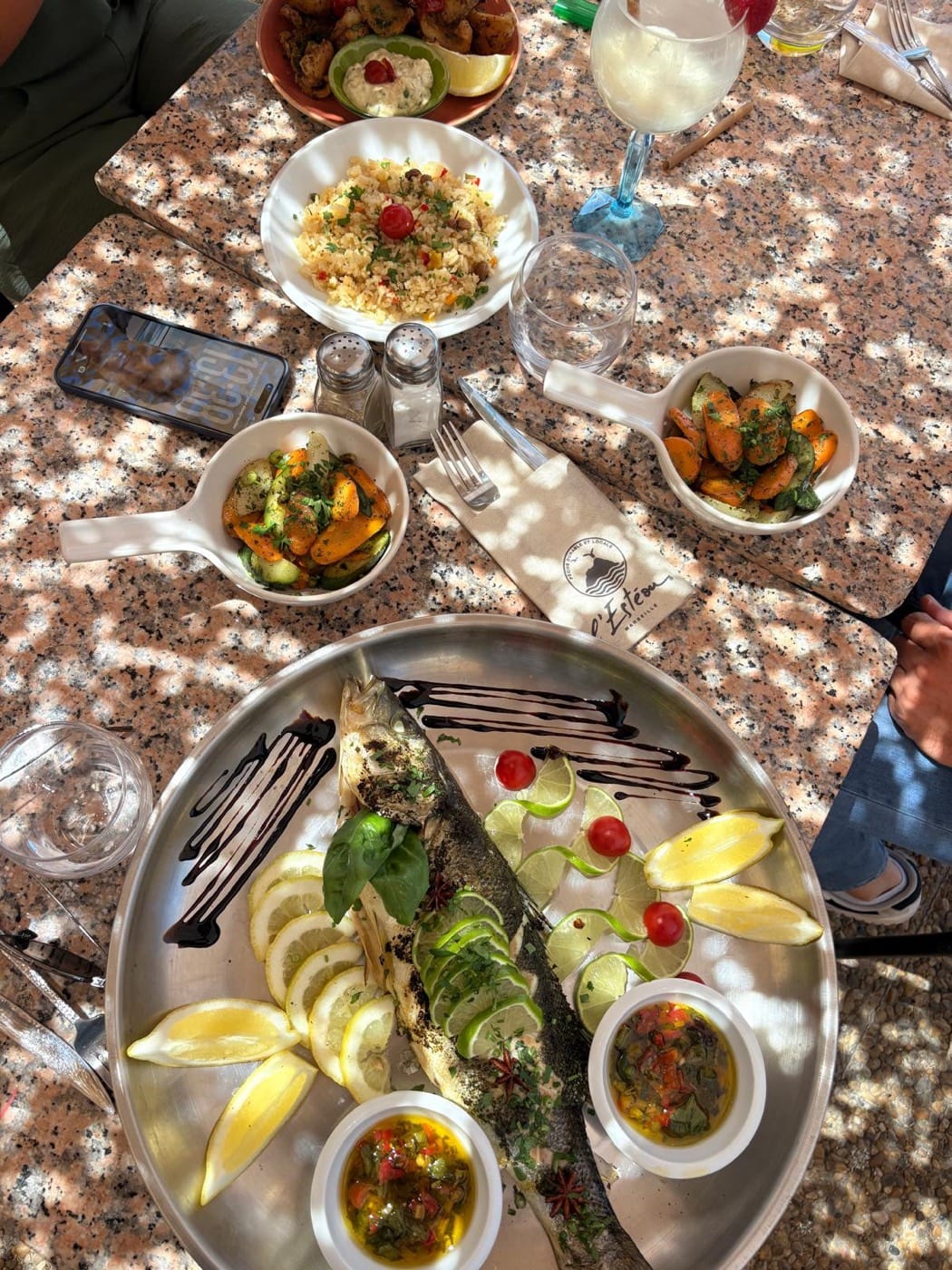
Frequently asked questions about wild and farmed fish
Is sea bass always wild?
No: it's one of the most farmed Mediterranean species. Check the label or ask.
Is wild fish more expensive, and why?
Usually, because catches are limited, irregular and labour-intensive.
Can you spot farmed sea bream by eye?
Sometimes, never for sure. Trust the label.
What does FAO area 37 mean?
It's the Mediterranean and Black Sea catch area, used for wild fish.
Is farmed fish less healthy?
There is no simple answer; refer to health authorities or a professional.
Why does a fishing restaurant's menu change?
Because it follows what the sea provides each day.
Discover more
Keep exploring: catch of the day, freshness, species and fishing.
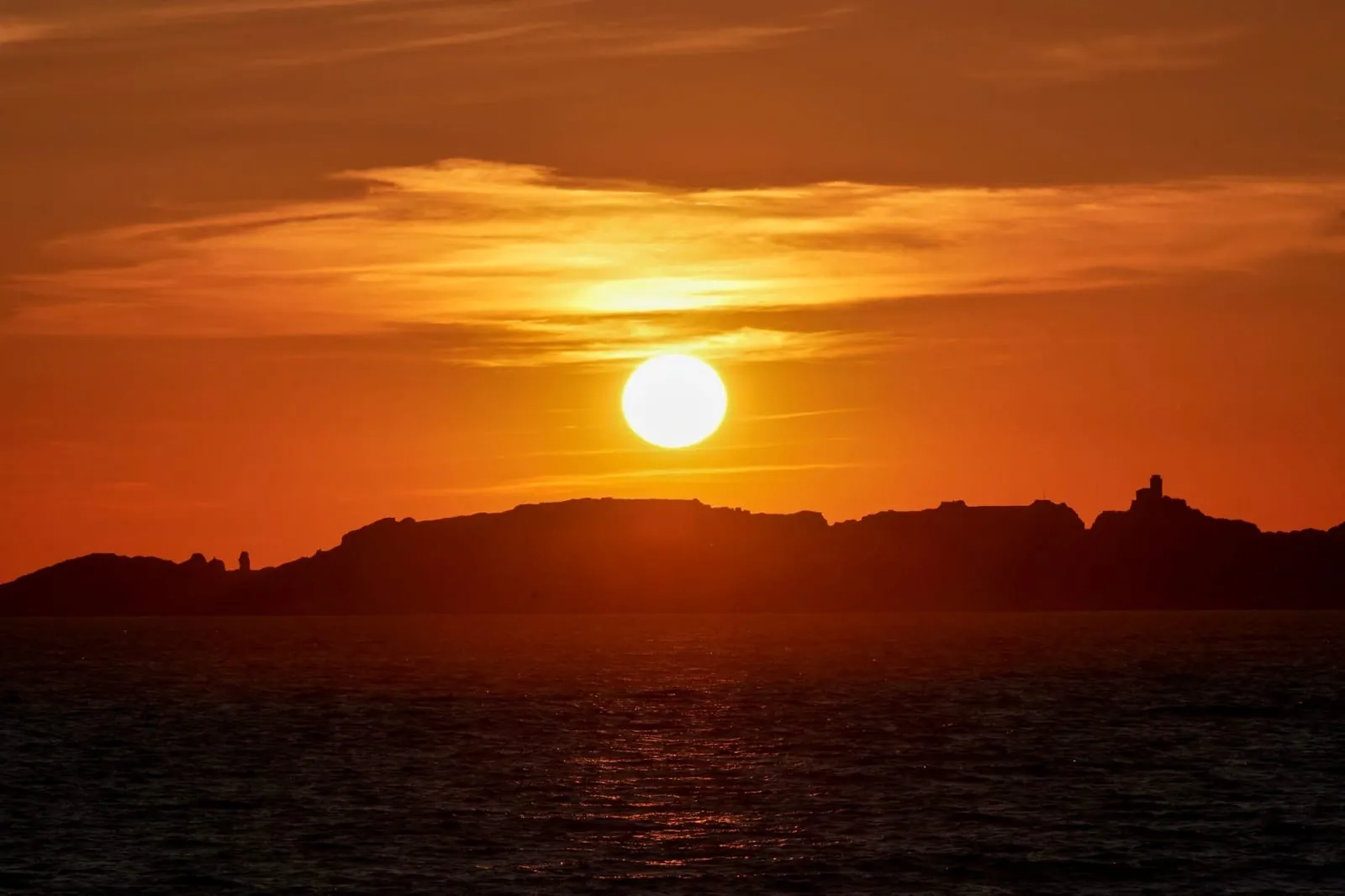
The morning's catch, served facing the sea
Now come and taste it: discover our poisson du jour Marseille, caught off Pointe Rouge.
Book your table
Tuesday-Saturday · 10am to midnight · Sunday 12pm-2pm · Closed on Monday