Guide · Choosing your fish well
How to tell if a fish is fresh?
Eye, gills, smell, flesh, scales, stiffness: six signs are enough to judge a fish's freshness yourself, at the stall or at the restaurant. The l'Estéou guide, at Pointe Rouge.
Book a table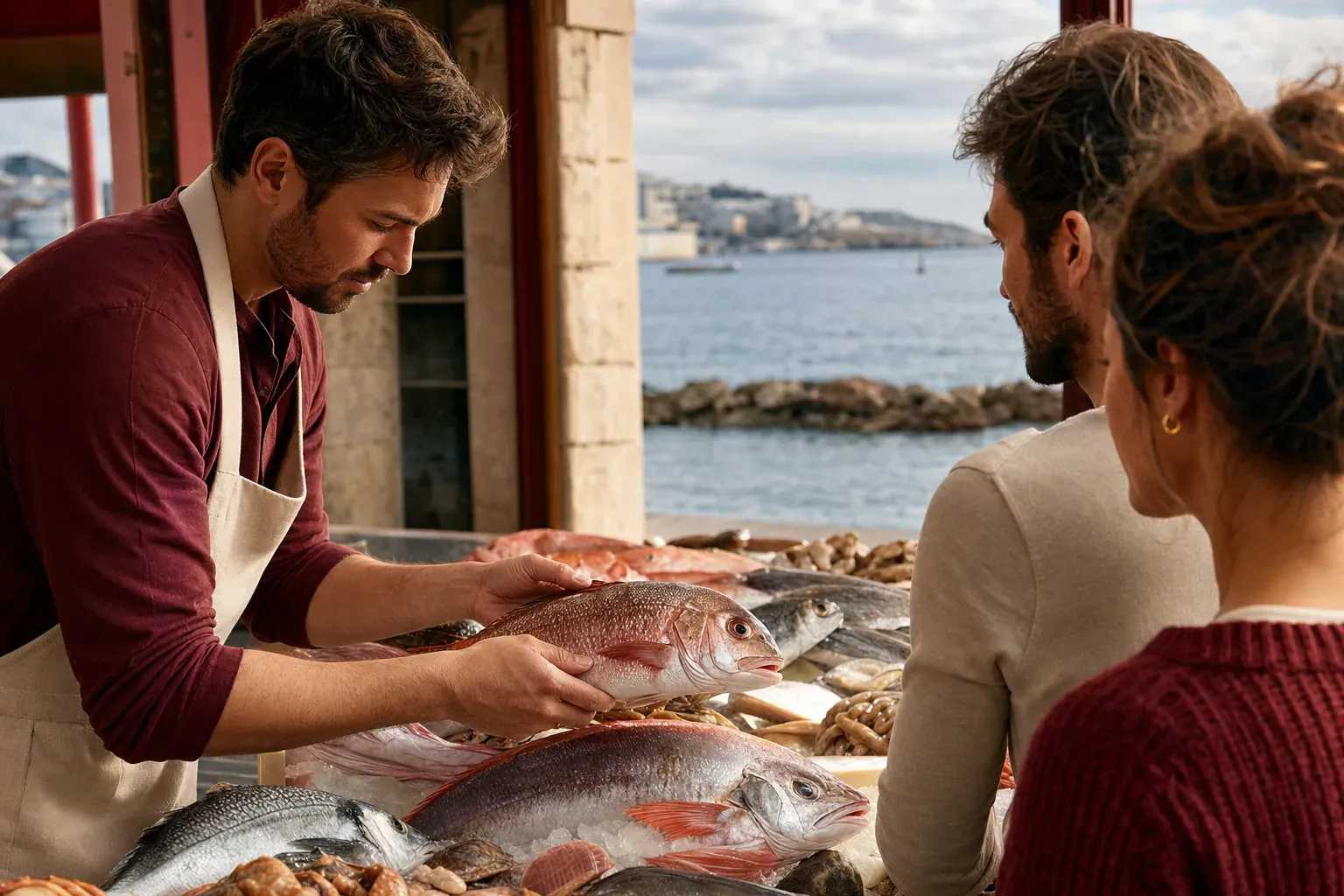
A fresh fish shows six matching signs: a bulging, glossy eye with a deep black pupil, bright red, moist gills, a scent of iodine and sea (never of 'fish'), firm flesh that springs back under the finger, glossy, well-attached scales, and a still-stiff body. On a fillet, look for translucent, pearly flesh, with no pooled water or yellowed edge. At l'Estéou the question never arises: the catch of the day is landed the same morning at Pointe Rouge.
Why freshness changes everything
Freshness isn't a gourmet detail: it's what separates a good fish from a dull one, and sometimes from a fish to avoid. A freshly caught fish has clean flesh, a true taste of the sea and a texture that holds up to cooking. Within a few days everything quietly declines, and the notorious 'fishy' smell — which is precisely not that of a fresh fish — sets in.
There's also a matter of safety: the longer the cold chain and the more handling, the more bacteria and histamine develop. Reading the signs of freshness protects both your pleasure and your health.
The good news: you don't need to be a fishmonger. A fresh fish shows it all over its body — you just need to know where to look, which is exactly what we detail below, sign by sign.
The 6 unmistakable signs
No single sign is enough on its own, but together they don't lie. Go through them in order, from the most visible to the most subtle.
The eye
Bulging, glossy, translucent, with a deep black pupil. A sunken, dull or greyish eye signals a fish that is already a few days old.
The gills
Lift the operculum: gills should be bright red to deep pink, moist and glossy. Brown, greyish or stuck together, they give away age.
The smell
Iodine, seaweed, sea spray: a fresh fish smells of the tide, not of 'fish'. A strong, sour or ammonia smell is a stop sign.
The flesh
Firm and springy: pressed with a fingertip, it bounces back without keeping the mark. Soft flesh that stays dented has lost its freshness.
Scales and skin
Glossy, well attached, covered in a clear, non-sticky mucus. Scales that fall off on their own or dull skin are a bad sign.
The stiffness
Just after the catch the body is stiff and holds straight on the hand. A fish that flops limply in two is already past that stage.
The eye and the gills, your best judges
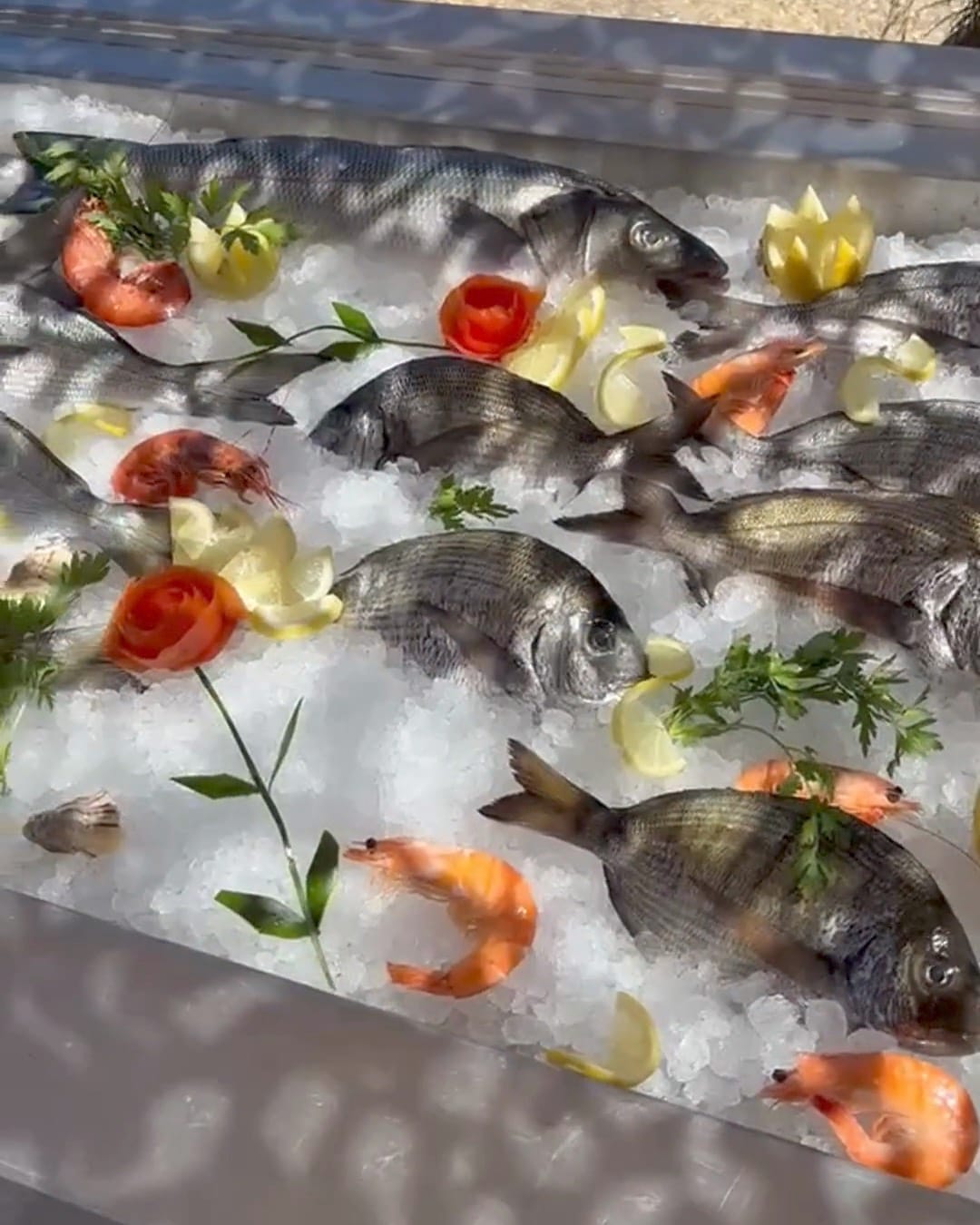
If you only remember two checks, make them these. The eye first: on a fish straight from the sea it is bulging, translucent and fills its socket, with a jet-black pupil and a clear cornea. Over the hours it dries, flattens, clouds to a milky grey and sinks.
Then the gills. Gently lift the operculum: the gill filaments should be bright red to deep pink, glistening with moisture, with no thick deposit or unpleasant smell. As the fish ages they pale, brown and eventually stick together.
These two markers are hard to fake. A fish can be rinsed and dressed on ice, but a sunken eye and dull gills always tell the truth. Always start there.
The most honest test
The smell: what your nose already knows
Smell is probably the most reliable judge, because it's the hardest to fool. A truly fresh fish barely smells at all, or smells of the sea: iodine, fresh seaweed, spray. A clean, marine scent that makes you hungry.
The strong 'fishy' smell many think is normal is in fact a sign of ageing, from compounds that appear as the flesh breaks down. Any sour or ammonia note means the fish is past its time, however good it looks.
At a restaurant you can't sniff every plate, but a place with no suspect odour, where the fish arrives clean and scented with lemon and olive oil, already sends the right signal.
The flesh, the scales and the stiffness
Touch confirms what the eye saw. Fresh fish flesh is firm and elastic: press it and it springs back without keeping the dent. If the hollow stays, or the flesh feels soft, the freshness is gone.
Scales and skin speak too. On a recent fish, scales are glossy, firmly attached and covered in a clear, barely slippery mucus. Scales that rub off, dull skin or thick sticky mucus are warning signs.
Finally, stiffness. In the hours after the catch the fish is rigid and holds straight on the hand. One that flops on both sides is past that stage — not a deal-breaker if well kept, but one more marker for the overall picture.
Whole fish or fillet: how to judge when the markers vanish
While the fish is whole, it's simple: eye, gills and body give the verdict. Once it's filleted, the head and gills — your best clues — are gone, so you change method.
On a fillet, look for translucent, pearly flesh with a faint iridescence, tight and glossy. The muscle stripes should stay clean and attached. Avoid matt, yellow-edged flesh sitting in a milky liquid: pooled water means a fillet already releasing its juices.
The cut edge tells a lot too: clean on a recent fish, blurred and dried out with time. And again, smell settles it — iodine and freshness, never sour. The same markers apply on the plate at a restaurant.
Not to be confused
Fresh, wild, in season: three different things
These three words are often mixed up. 'Fresh' is about time since the catch; a farmed fish can be perfectly fresh, a badly kept wild one no longer. 'Wild' is about origin — caught at sea, not farmed. 'In season' is about timing: each species has its best months.
The six signs here measure freshness, not origin or season. To know which species to choose through the year, see our dedicated guide: which fish to eat in Marseille — from sea bream to red mullet, season by season.
How long does fresh fish keep?
Once you've chosen a good fish, it still needs to be kept properly. A few simple pointers.
The same day, ideally
Fresh fish is best cooked within 24 hours. The sooner you eat it, the more you enjoy its texture and clean taste.
1 to 2 days chilled
In the coldest part of the fridge (0–4 °C), on ice or a clean cloth, a whole gutted fish keeps one to two days. A fillet, rather the same day.
Freezing, otherwise
To keep it longer, freeze it very fresh and right through. Thawed in the fridge, the flesh loses a little firmness — hence starting from a truly fresh fish.
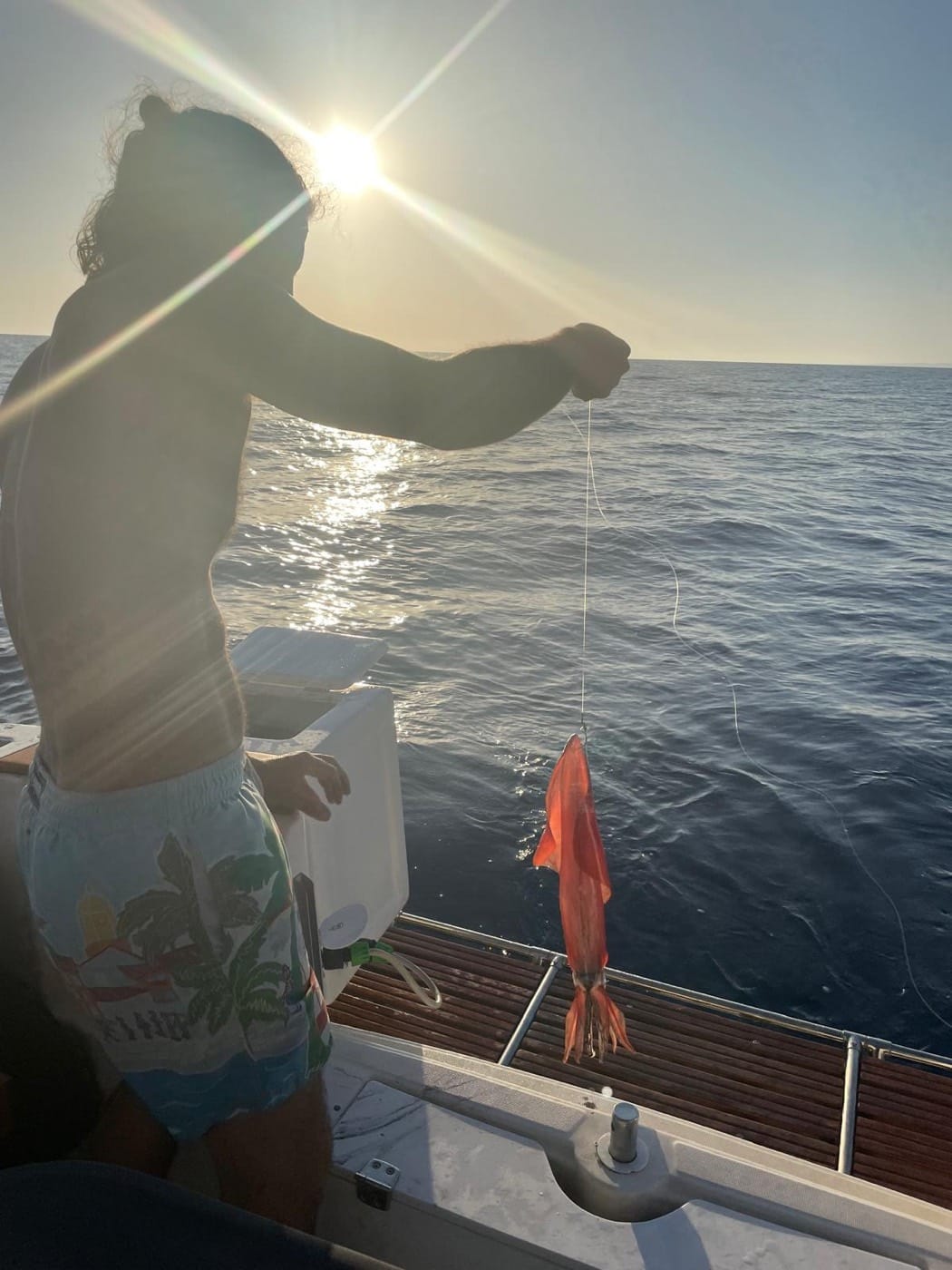
At l'Estéou, the catch of the day landed in the morning
Here, all these checks are already done, in the best possible way. At l'Estéou the catch of the day comes from the Patron and his fishermen friends, off Pointe Rouge. Landed the same morning, it goes from the boat to the kitchen within the morning — no miles, no days in cold storage.
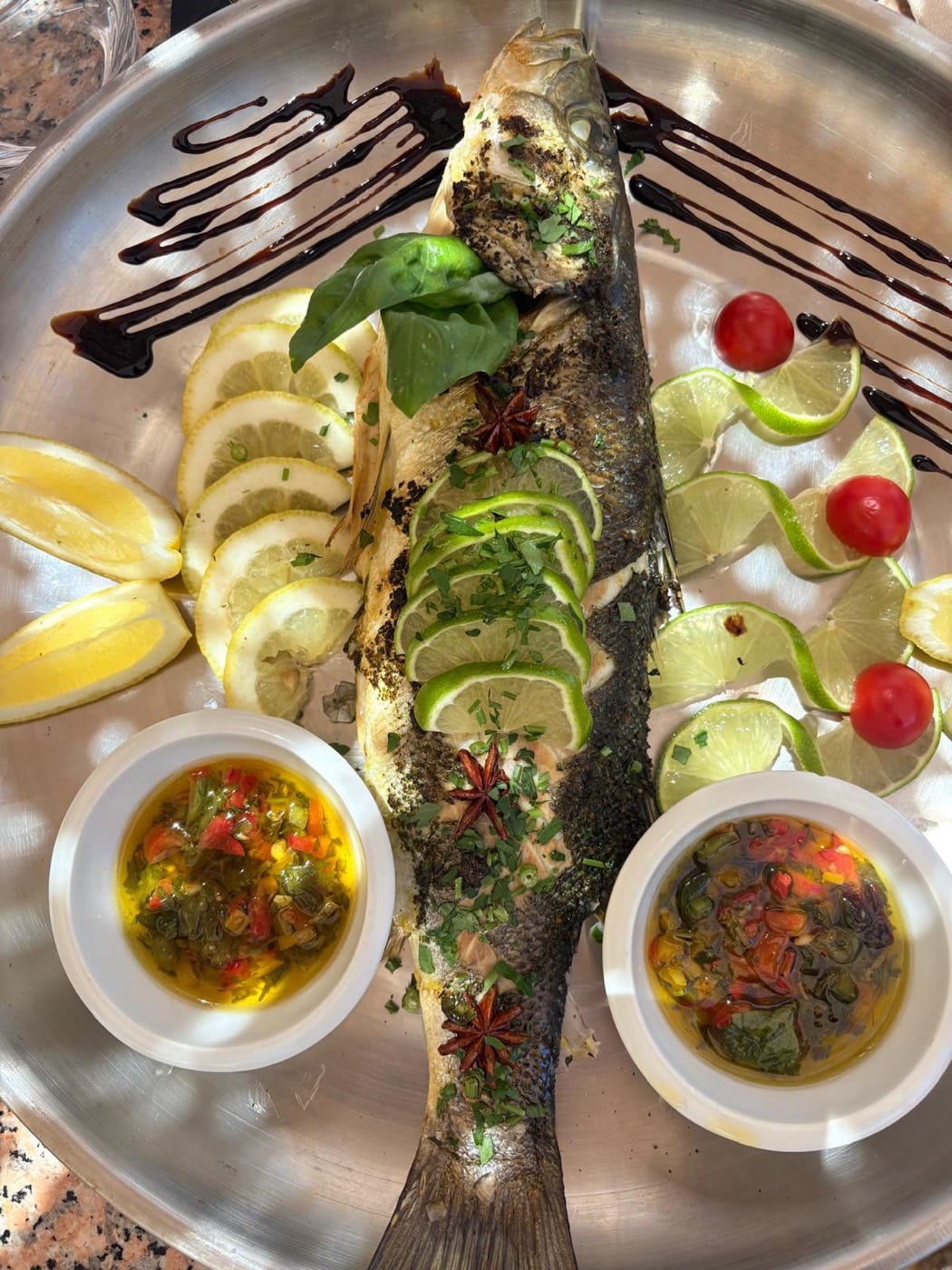
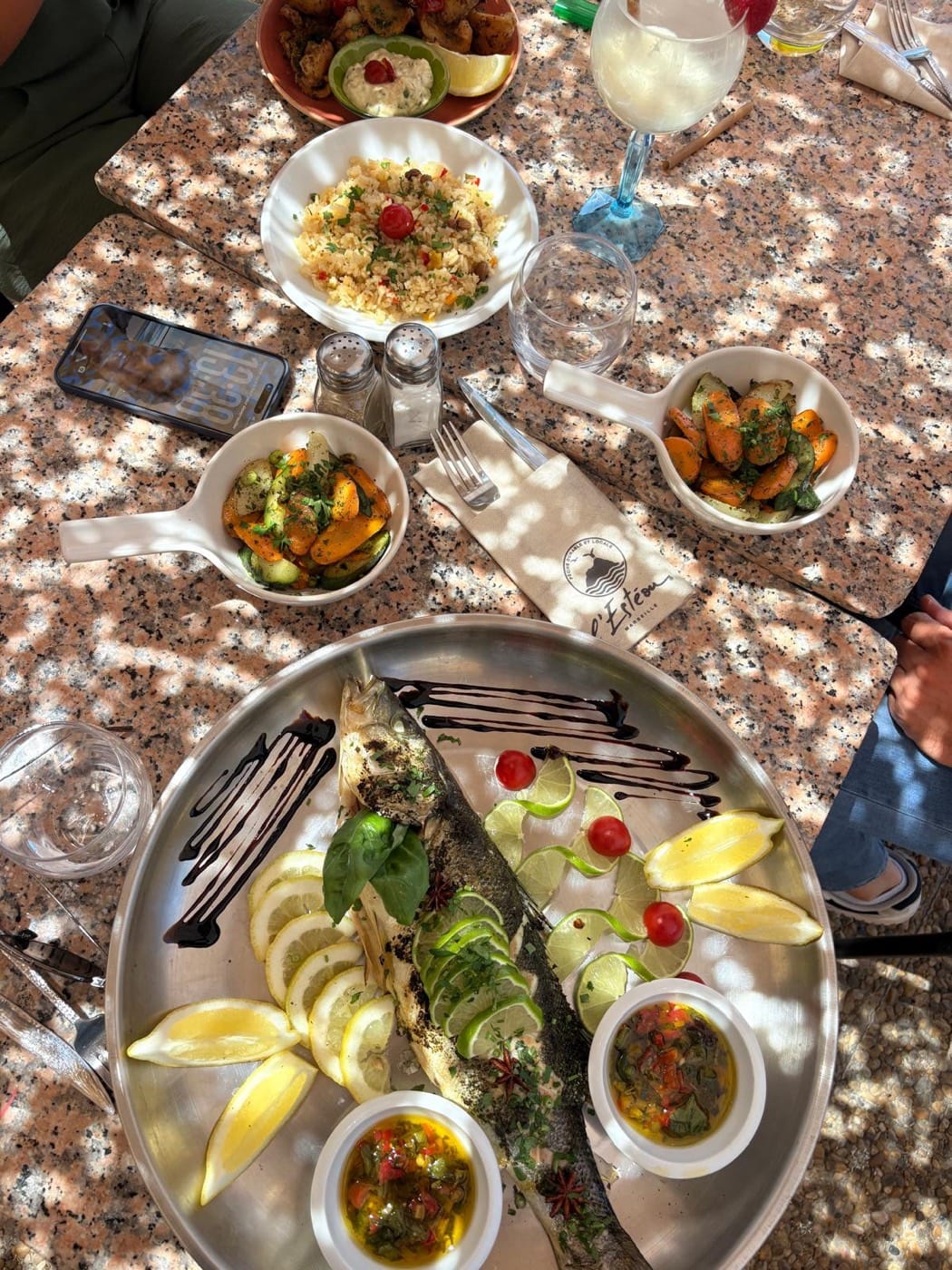
This short circuit is why the chalkboard changes with the catch, with no species or quantities decided in advance. We grill, fillet and plate what the sea gave, with olive oil, lemon and little else. Freshness as the only signature.
Want to know exactly where the catch comes from? We tell the story in our article on how the fish of Pointe Rouge is caught. And to sit down, all it takes is a booking.
Book my tableFrequently asked questions about fresh fish
How can you tell a fish is fresh?
By six matching signs: a bulging, glossy eye with a black pupil; bright red, moist gills; a scent of iodine, not of 'fish'; firm flesh that springs back; glossy, well-attached scales; a still-stiff body. Together, they don't lie.
How do you smell a fresh fish?
A fresh fish smells of the sea: iodine, seaweed, spray — clean and light. A strong, sour or ammonia 'fishy' smell is a sign of ageing. If your nose hesitates, it's better to pass.
How do you spot a fresh fillet at a restaurant?
Without the head, trust the flesh: translucent, pearly, firm and glossy, with clean, attached stripes. Beware matt, yellow-edged flesh sitting in a milky liquid, and any smell other than marine.
Does fresh mean wild?
No. 'Fresh' is about time since the catch; 'wild' is about origin (caught at sea rather than farmed). A farmed fish can be very fresh; a badly kept wild one may not be. They are two separate criteria.
How long does fresh fish keep?
Ideally, cook it the same day. In the coldest part of the fridge, on ice, a whole gutted fish keeps one to two days; a fillet, rather the same day. Beyond that, freezing it very fresh and right through is best.
How can you be sure to eat fresh fish in Marseille?
Choose a table whose menu follows the catch and announces a fish of the day. At l'Estéou, at Pointe Rouge, the fish is landed the same morning by the Patron and his fishermen friends, then grilled to order facing the sea.
Discover more
Keep exploring: the catch of the day, coastal fishing and the species of the Mediterranean.
Taste freshness, stop guessing it
The best way to recognise a fresh fish is still to eat a truly fresh one. Discover l'Estéou's poisson du jour Marseille, landed each morning at Pointe Rouge, and come taste it on the terrace facing the sea.

Book your table
Tuesday, Sunday · 10am to midnight · Closed on Monday