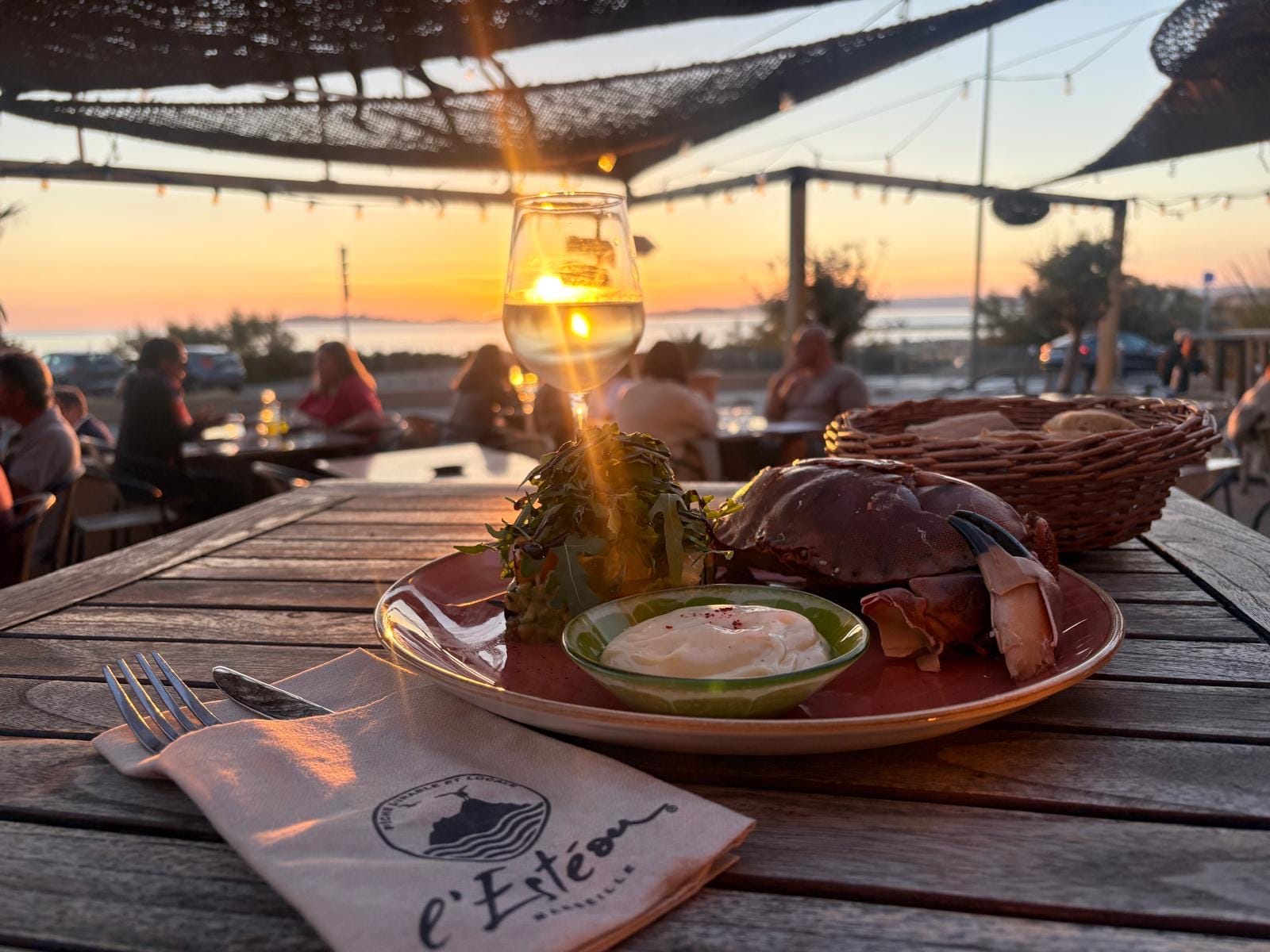
Provençal sauces · Marseille 13008
Aïoli or rouille: what's the difference, really?
Two garlic sauces born under the same sun, often mistaken for one another yet quite distinct. At Pointe Rouge, l'Estéou helps you tell them apart for good — and know which dish each belongs to.
Book my table→
The starting point
Two Provençal cousins, two characters
They are often confused, and for good reason: aïoli and rouille share the DNA of Provençal cooking — garlic, olive oil, a whisked texture that coats the fish. On a Marseille table, they look alike at first glance.
Yet everything sets them apart once the spoon goes in: the colour, the aroma, the heat and above all the dishes they accompany. Understanding the difference means understanding two ways of eating the sea in Marseille.
Side by side
Aïoli and rouille, face to face
Aïoli
- Colour
- Creamy white, almost pearly
- Base
- Pounded garlic, olive oil, sometimes an egg yolk
- Taste
- Mild, clearly garlicky, smooth
- Served with
- Grand aïoli, salt cod, poached fish, steamed vegetables
Rouille
- Colour
- Deep orange, rust-coloured
- Base
- Garlic, chilli, saffron, breadcrumb or potato, olive oil
- Taste
- Spiced, warm, punchy
- Served with
- Bouillabaisse, fish soup, grilled croûtons
Each sauce its dish
When aïoli appears, when rouille appears
Aïoli reigns over the Friday grand aïoli: its garlicky mildness embraces the poached fish, the potatoes, the eggs and the seasonal vegetables. It stands on its own, served as a generous quenelle at the centre of the table.
Rouille, on the other hand, is unthinkable without its broth. You spread it on a garlic-rubbed croûton and slip it into the bouillabaisse or the fish soup: its chilli and saffron wake up the briny stock. Two gestures, two moments. Read the article.
The l'Estéou experience
Both sauces, facing the Mediterranean
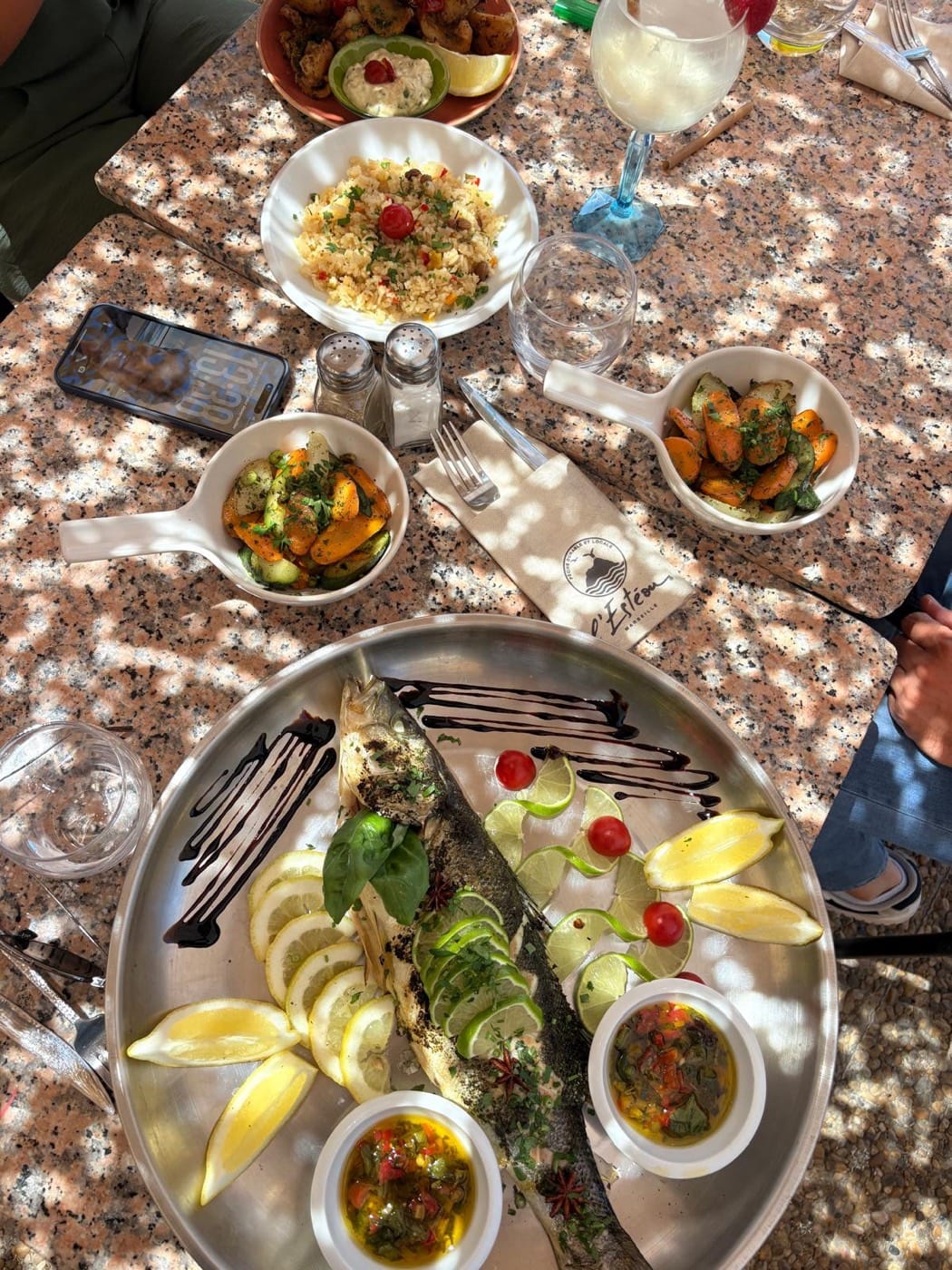
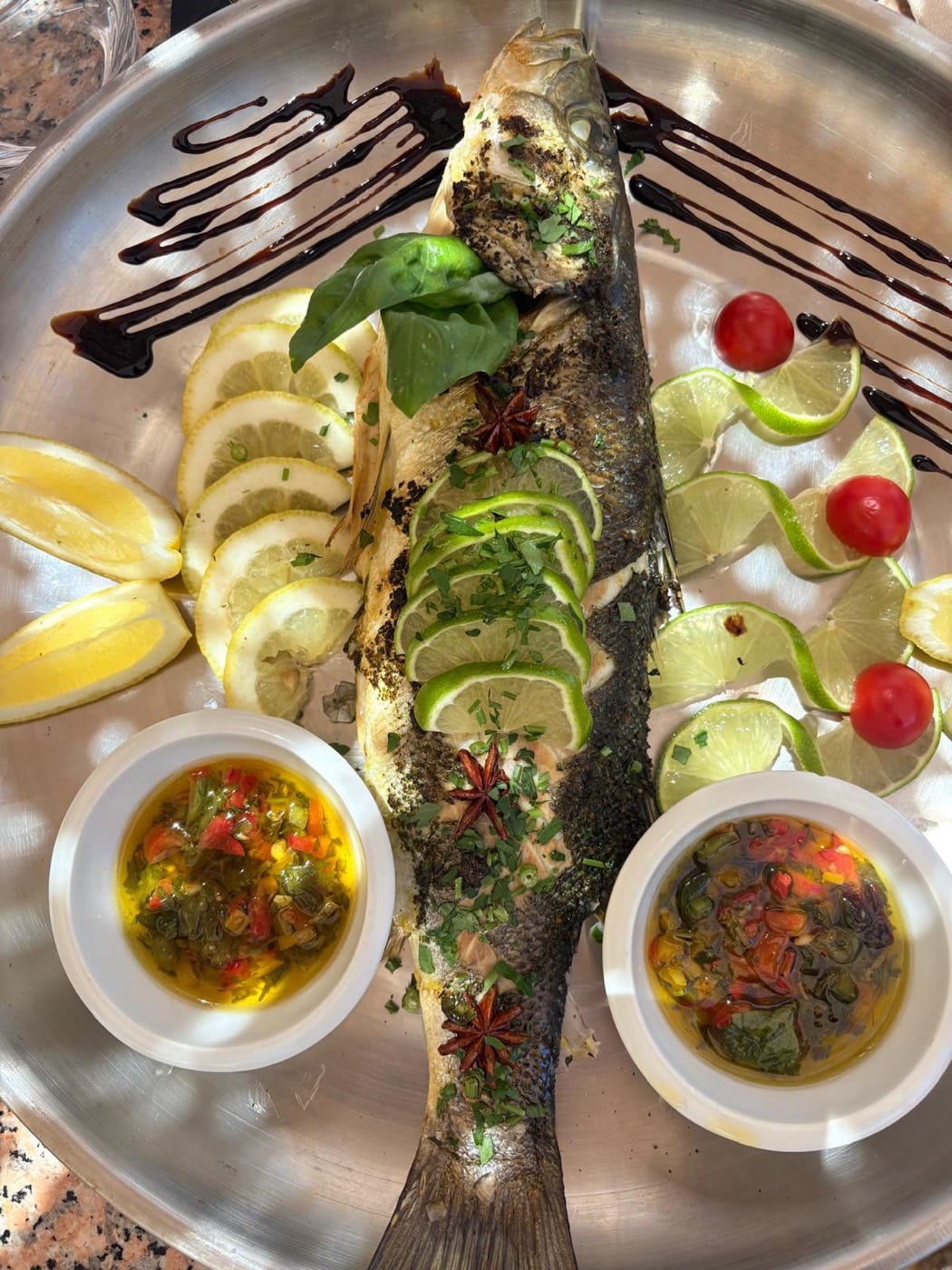
At Pointe Rouge, you take the time to taste the nuance: aïoli with the day's poached fish, rouille on a croûton dropped into the fish soup. Between the beach and the horizon of the calanques, each sauce tells its own piece of Marseille.
So you never mix them up
The memo that sorts it all out
- Colour: aïoli is creamy white, rouille leans orange.
- Chilli: present in rouille, absent from a classic aïoli.
- Saffron: the signature of rouille, never in aïoli.
- Texture: aïoli is an emulsion, rouille is bound with bread or potato.
- Aïoli accompanies poached fish and the grand aïoli vegetables.
- Rouille is reserved for bouillabaisse and fish soup.
The cluster
Discover more
Keep wandering around the sauces and the dishes of the sea that make up the Marseille table.
Good to know
Frequently asked questions
What is the difference between aïoli and rouille?
Aïoli is a white sauce whisked from garlic and olive oil, mild and smooth. Rouille is orange, spiced with chilli and saffron, and bound with breadcrumb or potato. Aïoli goes with poached fish, rouille with bouillabaisse.
Why is rouille orange?
Its rust colour comes from the chilli and, above all, the saffron added to the garlic and olive oil base. That warm hue is what gave it its name, by analogy with the rust of metal.
Can you swap aïoli for rouille?
They are not interchangeable: the mildness of aïoli suits the grand aïoli and vegetables, while the heat of rouille is made to lift a fish broth. Each has its own dish.
Does rouille contain strong chilli?
Rouille is spiced but stays balanced: the chilli brings warmth without overpowering the saffron or the garlic. It wakes up the bouillabaisse rather than burning it.
Do you serve aïoli and rouille at l'Estéou?
Our sauces follow the catch and the day's menu. It's best to call us at +33 6 02 05 65 46 to check which dishes are available, or to book your table online.

Book your table
Tuesday, Sunday · 10am to midnight · Closed on Monday